Security Settings
Skyvia allows both public and private access to exposed data. Specifying certain user accounts and passwords, you allow access to the exposed data only to authenticated users. Skyvia supports HTTP basic authentication with username and password. It does not support privileges and customizing access rights to different exposed objects.
You can define security settings on the Configure security step of the endpoint wizard. For an existing endpoint, open its details and use the controls on the Overview tab.
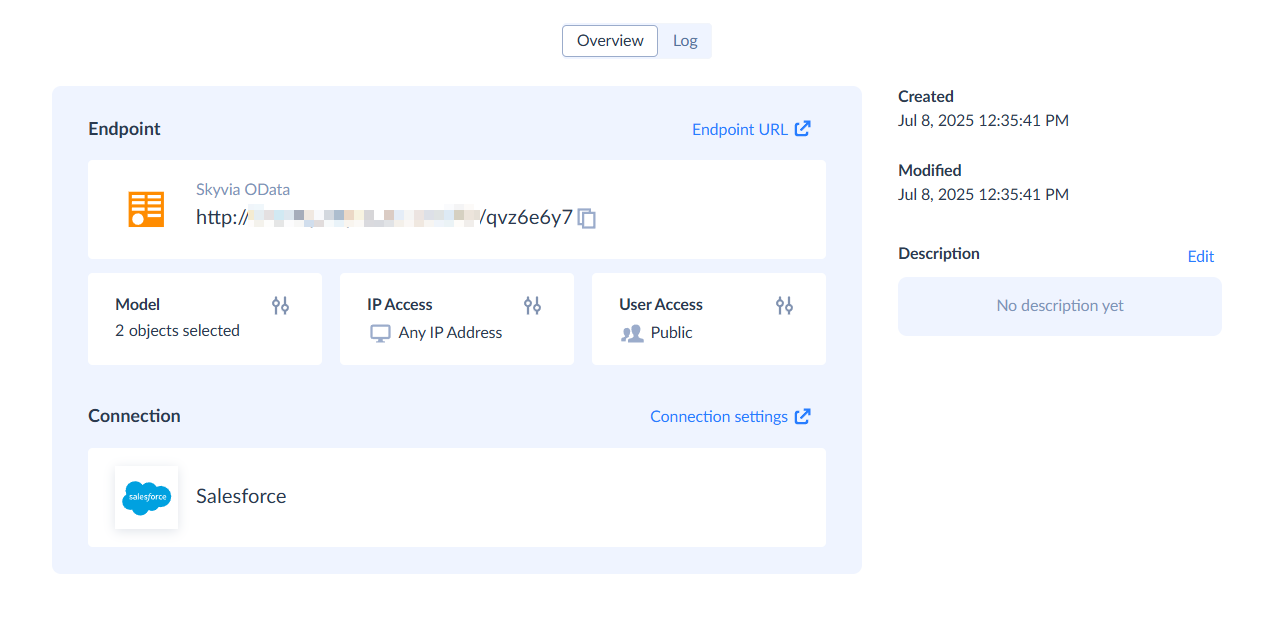
Public and Private Access to Endpoints
To view endpoints and their security status, open the Endpoints tab. A Lock icon indicates that the endpoint is private. To change its security settings, click on it and change the User Access settings.

User Accounts
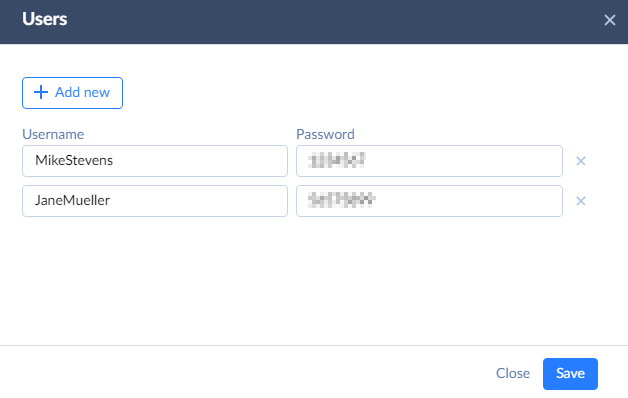
You can view the number of user accounts, created for an existing endpoint, on the Overview tab of the endpoint details, to the right of the endpoint protocol. If there are no user accounts created, it shows "Public". Click the arrow button to the right of the number of users in order to manage users for the endpoint. The Users dialog box will open.
To add a user, click +Add new, then enter the username and password.
To modify a user, edit their username and password in this dialog box.
If you need different users to be able to access different sets of data, you can create different endpoints, exposing these sets of data. If you don't specify any users, the endpoint data will be publicly available to anyone without authentication.
IP Addresses
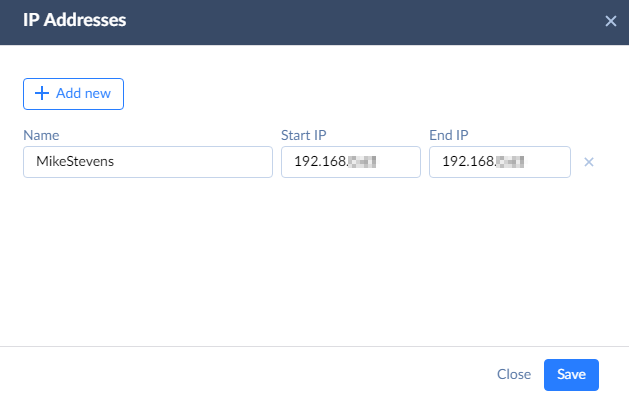
Skyvia allows you to limit the IP addresses, from which the data of the endpoint can be accessed. You can specify allowed IP addresses, address ranges, or CIDR blocks.
The number of such entries for an existing endpoint is displayed on the Overview tab of the endpoint details, to the right of number of endpoint users. To manage IP addresses for the endpoint, click the arrow button to the right of the IP ranges number. The Allowed IP Addresses dialog box will open.
Here you can use the corresponding button to add the corresponding entry: Add IP address, Add IP range, or Add CIDR notation.
After this, enter the corresponding values:
- for Add IP address, enter a single IP address.
- for Add IP range, enter the start and end IP addresses.
- for Add CIDR notation, enter the IP address and the prefix length.
You can optionally specify a Description for each entry.
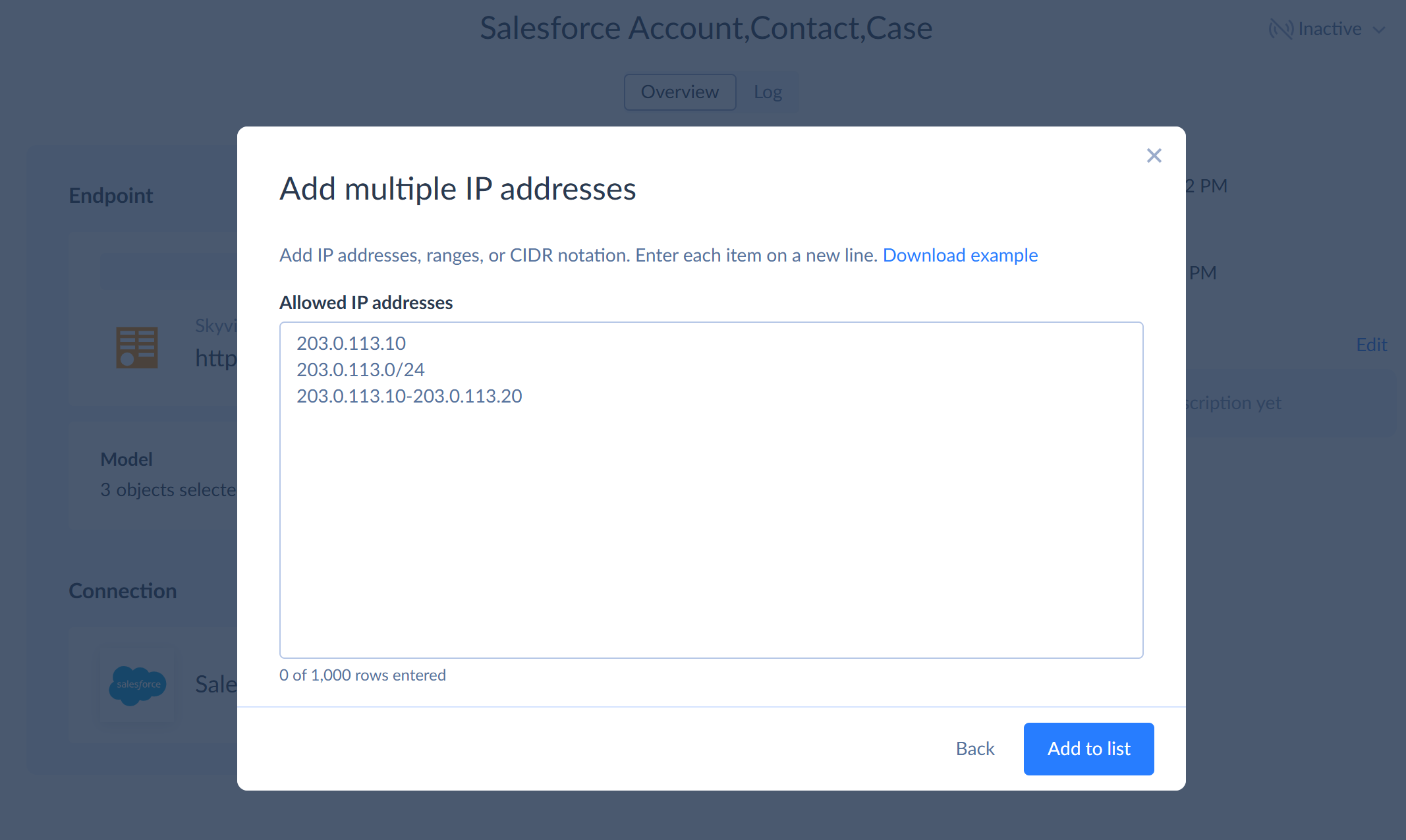
Alternatively, you may bulk enter IP addresses, ranges, or CIDR blocks. Click Add multiple and enter or paste multiple entries into the box as text.
Separate start and end IP addresses for a range with a hyphen for a range. Separate IP address and prefix length with a slash for a CIDR block. Each entry must be on a separate line.
If you don't specify any IP address ranges, the endpoint data will be available from any IP.